|
|
|
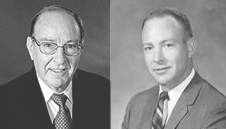
Apollo 14 | 31. Januar - 9. Februar 1971 | Dritte Mondlandung | Besatzung & Alter: Alan Shephard (47), Stuart A. Roosa (37), Edgar D. Mitchell (40) | Edgar Mitchell war als 6. Mensch auf dem Mond und er war der Lunar-Module-Pilot.
Apollo 14 | January 31-February 9, 1971 | Third Lunar Landing | Crew & Age: Alan Shephard (47), Stuart A. Roosa (37), Edgar D. Mitchell (40) | Edgar Mitchell was the 6th Man to Walk on the Moon and he was the Lunar Module Pilot. |
|
|
|
GK (Gisela Klötzer): Dr. Edgar Mitchell, Sie sind einer der wenigen Menschen, die vor circa 35 Jahren auf dem Mond waren. Können Sie sich erinnern, wann Sie zum ersten Mal über das Universum nachgedacht haben? Wie war das? EM (Edgar Mitchell): Als ich jung war, hatte ich immer Ehrfurcht vor dem Firmament und dem Universum. Meine natürliche Neigung war, Fragen zu stellen, was ist das und warum. Daher war ich immer fasziniert, kannte aber damals nicht das Wort, ich war fasziniert von der Vorstellung der Kosmologie, wie fand das alles statt. GK (Gisela Kloetzer): Dr. Edgar Mitchell, you are one of the few men, who were on the moon approximately 35 years ago. Can you remember when you contemplated the universe for the first time? What was it like? EM (Edgar Mitchell): When I was young I was allways in awe of the heavens and the universe. My natural proclivity was to ask questions, what is this and why. So I was always fascinated, but I didn't know the word then, but fascinated of that notion of cosmology, how did all of it happen. GK: Wann entstand in Ihnen der Wunsch, Astronaut zu werden? Wie kamen Sie dazu? EM: Nach dem College musste ich zum Militär, während des Koreakrieges hatten wir das Sonderkommando dort. Und so wurde ich Offizier. Ich war Testpilot bei der Marine als 1957 Sputnik hoch ging und ich dachte: Oh, direkt nach der unbemannten Raumfahrt werden voraussichtlich Menschen in den Weltraum fliegen. Das hört sich an, als ob es interessant werden könnte. Ich hatte zu dem Zeitpunkt keine Militärkarriere geplant. Aber die Herausforderung, dass möglicherweise Menschen in den Weltraum fliegen, zu dem Zeitpunkt war noch kein Mensch im Weltraum, nur computergesteuerte Raumfahrzeuge, diese Idee der bemannten Raumfahrt war sehr faszinierend. So änderte ich meine Berufsziele und Pläne, um mich in diese Richtung zu bewegen. Und das war 1957. GK: When arose the wish to become an astronaut? How came it? EM: After my college I had to go into the military, during the Korean war we had the draft at that point. I had to go into the military during the Korean war, and so I was a military officer. I was a navy test pilot in 1957, when Sputnik went up, and I thought: Oh, humans are likely to be right behind robot spacecraft. That sounds like it would be interesting. Now I did not have any plan on a military career at that point. But the challenge of the possibility of humans going into space which, there had not been any humans in space at that point, just the robot spacecrafts, but the idea of humans going into space was very intriguing. So I changed my career goals and plans in order to move in that direction. And that was in 1957. GK: Woher stammt eigentlich der Ausdruck "Roger" beim Funksprechverkehr der NASA? EM: Das kommt aus dem Funkjargon des Militärs. Ich kenne den wirklichen Ursprung nicht, aber es ist sicherlich auf den zweiten Weltkrieg zurückzuführen und vielleicht sogar davor. Es heißt einfach "bestätigen", "ich verstehe", aber ich weiß nicht, woher das Wort stammt. GK: What is the origin of the expression "Roger", used on NASA's radio telephony? EM: That comes out of military radio jargon. I do not know the real origin of it, but it goes back certainly to World War II and perhaps even before. It simply means "acknowledge" or "I understand", but I don't know where the word came from. GK: Hat jemals ein Astronaut im Weltraum versucht zu malen? Wie ist das? EM: Das weiß ich nicht. Sie müssten Alan Bean oder Alexei Leonov fragen. Das sind die beiden Astronautenkünstler, die ich kenne. Ich denke nicht, dass sie es taten, aber vielleicht haben sie einige Skizzen im Weltraum gemacht. GK: Has any astronaut ever tried to paint while in space? How is that? EM: I don't know. You would have to ask Alan Bean or Alexei Leonov. They are the two Astronaut artists that I know. I don't think they have, but maybe they did some sketching in space. GK: Sie sind nach der gefährlichen Odyssee von Apollo 13 zum Mond geflogen. Wissen Sie, ob die Astronauten von Apollo 13 dieses Erlebnis verkraftet haben? EM: Ja, ich bin sicher, das haben sie. Apollo 13 war ursprünglich unser Flug. Nach dem Rotationsplan war ich für A13 vorgesehen. Und dann kam Alan Shepherd in die Crew, um Gordon Cooper zu ersetzen, mit dem ich an Apollo 10 gearbeitet hatte. Da Shepard wegen gesundheitlicher Probleme für einige Zeit am Boden bleiben musste und nicht trainiert hatte, wollte die Zentrale, dass wir mehr Zeit zum Training haben. So hatten wir einen Crewtausch zwischen Jim Lovell's Crew und unserer. Sie nahmen die 13, wir die 14. Sie bekamen eine schlechte Maschine, wir bekamen die gute Maschine. Aber wir standen uns sehr nahe und ich kenne die Apollo 13 Crew sehr gut. Ich weiß, sie haben es zu gegebener Zeit verkraftet. GK: You flew to the moon after the dangerous odyssey of Apollo 13. Do you know, if the astronauts of Apollo 13 came to terms with this experience? EM: Well, I'm sure they did. Apollo 13 was originally my flight. I was scheduled for A13 according to the crew rotation schedule. And then Alan Shepherd came on the crew to replace Gordon Cooper, with whom I had worked on Apollo 10. And since Shepard had been grounded with a medical problem for some time and had not been training, headquarters wanted us to have more training time. So we had a crew switch between Jim Lovell's crew and ours. They took 13, we took 14. They got a bad machine, we got the good machine. But we were all very close and - I knew the Apollo 13 crew very well and I know they must have come to terms with it. In due course. GK: Was ging auf dem Flug zum Mond mit Apollo 14 in Ihrem Innern vor? Wie war es, die Erde hinter sich zu lassen, Ihren Heimatplaneten? EM: Nun, die Beschreibungen von der Beobachtung der Erde aus dem All und das philosophische Verständnis, das ich erlangte, das war auf dem Weg nach Hause, nachdem die Mission auf dem Mond erfüllt war. Und da war reichhaltig Zeit, sich die Erde anzusehen und kontemplativ und philosophisch zu sein. Nur die genaue Konfiguration, in der sich das Raumfahrzeug befand, erlaubte eine umfassende Sicht auf den Himmel. Wir drehten uns, um das Raumfahrzeug in einem thermischen Gleichgewicht zu halten. Dadurch konnten wir die Erde, den Mond, die Sonne, die ganz Palette der Sterne im Kabinenfenster auftauchen sehen, alle zwei Minuten, und das war eine beeindruckende Erfahrung. Was es in mir verursachte war ein tiefer Einblick, eine so genannte Epiphanie, in welcher ich ein Hochgefühl empfand. Ich erkannte, dass die Moleküle meines Körpers und meines Raumfahrzeugs in irgendeiner alten Generation von Sternen produziert worden waren. Und plötzlich, anstelle intellektuellen Wissens, wurde es eine sehr persönliche Erfahrung bis in die Eingeweide. Irgendwann später, nachdem ich auf dem Gebiet der Literatur geforscht hatte, entdeckte ich, dass die alten Inder dieses Erlebnis vor einigen hundert Jahren im Sanskrit beschrieben hatten und es Samadhi nannten. Es wird als das Erlebnis beschrieben, Dinge visuell und individuell in ihrer Getrenntheit zu sehen, die aber innerlich und bis in die Eingeweide als eine Einheit, und begleitet von Glück oder Verzückung, erlebt werden. Es war ein sehr heftiges, beeindruckendes Erlebnis, das mich dann veranlasste, diese letzten 35 Jahre damit zu verbringen, auf dem Gebiet der Natur des Bewusstseins zu forschen, weil ich bemerkte, dass es etwas war, was wir in der Wissenschaft nicht nur nicht verstanden, sondern als Forschungsobjekt völlig mieden. GK: What went on inside you on your flight to the moon with Apollo 14? What was it like to leave the earth behind, your home planet? EM: Well, the comments of the observation of Earth from space and philosophic insights that I obtained, were on the way home after the mission on the moon had been completed. And there was ample time look at Earth and be contemplative and be philosophic. But the precise configuration the spacecraft was in, allowed a panoramic view of the heavens. We were rotating to keep thermal balance on the spacecraft. Thus we could see the Earth, the moon, the sun, the entire panoply of stars appear in the cabin window every two minutes, and that was a very powerful experience. What it caused for me was a deep insight, called an epiphany, in which I experienced an exhilaration. I realized, the molecules of my body and the molecules of my spacecraft had been manufactured in some ancient generation of stars. And suddenly, instead of intellectual knowledge, it became a very personal visceral experience. Sometime later, after I had done research in the literature, I discovered that the ancients in India had described this experience in the Sanskrit several hundred years ago and it was called samadhi. It is described as the experience of seeing things visually and individually in their separateness, but experiencing them inwardly and viscerally as a unity and accompanied by a bliss or ecstasy. It was a very powerful, powerful experience that caused me then to spend these last 35 years, doing research in the nature of consciousness because I realized, that was something we in science not only did not understand, but had completely avoided as an object of inquiry. GK: Was erwarteten Sie auf dem Mond? Sie waren vorbereitet. Wurden Ihre Erwartungen erfüllt? EM: Nun unsere Erwartungen - wir hatten eine Mission und unser Auftrag war, Wissenschaftler zu sein. Auf speziell unserem Flug waren wir die erste Mission, die vorrangig einen wissenschaftlichen Auftrag hatte. Die früheren Missionen betrafen den Einsatz, um sicher zu stellen, dass wir den Job machen konnten, dort sicher hinkommen und präzise landen konnten. Unser Job war, das zu tun und dann Mondwissenschaft zu betreiben. Es wurde erwartet, dass wir die Augen und Ohren der Wissenschaftler auf der Erde sind und dass wir die Daten sammelten, die sie wünschten, um dabei zu helfen, die geologische Beschaffenheit des Mondes und die Mondoberfläche zu verstehen. Den Ursprung des Mondes und wie er mit dem Ursprung der Erde in Zusammenhang steht. Das war die Mission. GK: What did you expect on the moon? You were prepared. Were your expectations fulfilled? EM: Well our expectations - we had a mission and our mission was to be scientists. On our particular flight we were the first mission to have primarily a scientific mission. The earlier two missions had been operational, to make sure we could do the job, could get there safely and land precisely. Our job was to do that and then begin doing lunar science. So the expectation was, that we would be the eyes and ears of the scientists on Earth and gather the data that they wanted, to help understand lunar geology and understand the lunar surface. Understand it's origin and how it related to the Earth origin. That was the mission. GK: Als Sie auf dem Mond landeten, waren Sie sehr beschäftigt. Konnten Sie sich auf Ihre Arbeit konzentrieren? Blieb Zeit übrig, sich Ihrer Landung auf dem Mond bewusst zu werden? EM: Sie müssen wissen, dass der Zeitplan so ausgelastet war, wir hatten unsere Zeit so geplant, dass, falls irgendein Gerät versagte, wir ununterbrochen zu tun hatten. Deshalb planten wir 120 Prozent menschlicher Leistungsfähigkeit, und da kein einziges Gerät ausfiel, hatten wir durchgehend zu arbeiten. Wir hatten die Missionsziele Minute für Minute auf einer Checkliste und eine Stoppuhr am anderen Handgelenk, und so arbeiteten wir, während wir auf der Oberfläche waren, ständig gegen die Zeit. Es gab sehr wenig Zeit, introspektiv zu sein. Nur hin und wieder warfen wir einen Blick auf die Landschaft, aber da war eigentlich keine Zeit, in sich gerichtet zu sein, die Sicht wirklich einzubeziehen und ein ergriffener Tourist zu sein. GK: When you landed on the moon, you were very busy. Could you concentrate on your work? Was there any time left to become aware of your moon landing? EM: Well you know, the mission timeline was so busy, we had programmed our time so that in case equipment failed, we would not have be left with nothing to do. So we programmed 120 percent of human capacity, and since we didn't have any equipment failed, we had to work continuously, and we had the mission objectives minute by minute on one check-list and a stop-watch on another wrist, and so we were working against the clock all the time we were on the surface. There was very little time to be introspective. But we did steal a moment now and then to look at the landscape, but there wasn't really any time to be introspective and just take in the view, and be an awestruck tourist. GK: Auf dem Mond muss es sehr still sein. EM: Das einzige Geräusch ist natürlich das Geräusch, das wir selbst machen. Und es gibt dort keine Möglichkeit für den Schall, übertragen zu werden, da der Mond keine Atmosphäre hat. Das einzige Geräusch, was wir hören, ist der Funk in unserem Kopfhörer, wenn wir mit den Menschen auf der Erde sprechen. GK: It must be very quiet on the moon. EM: Of course, the only noise of course, is the noise we are making. And there is no way for sound to be transmitted, since there is no atmosphere on the moon. And the only noise we hear is the radio in our head-set, talking with the people on Earth. GK: Sie konnten also erst später über das Tun der Erdbewohner reflektieren. EM: Ja, das kam alles später auf dem Weg nach Hause, als die Mission erfüllt war, und auf dem dreitägigen Trip mehr Zeit war, sich auszuruhen und kontemplativ zu sein. GK: So you could only later think about the activities of the Earth population. EM: Yes that came all later on the way home, when the mission was accomplished and there was more time to rest and be contemplative on the three days trip home. GK: War die Landung auf der Erde bzw. auf dem Ozean hart? EM: Das war ungefähr so, wie wenn man von einer drei Meter hohen Mauer oder Leiter springt, drei Meter tief fällt. Ja, es war ein ganz schöner Aufprall, aber die Sitze hatten Schockstreben, um die Belastung zu absorbieren. So waren wir darauf vorbereitet. GK: Was the landing on Earth, that is the ocean, hard? EM: Well, that was about like jumping off of a three meter high wall or ladder, dropping from about three meters. Yes it was a pretty good impact, but the seats had shock struts to absorb the stress. So we were prepared for that. GK: Hat sich Ihr Hauptinteresse verändert, nachdem Sie auf dem Mond waren? EM: Ja, mein Interesse hat sich natürlich darauf verlagert, die Kosmologie des Bewusstseins zu verstehen. Wie wurden wir die denkenden Wesen, die wir sind? Das ist mein Anliegen, Bewusstheit und Bewusstseins, und es vom Standpunkt der Wissenschaft, im Gegensatz zum Standpunkt der Theologie, zu verstehen. GK: Has your main interest changed, after you went to the moon? EM: Yes, my interest certainly has shifted toward understanding of the cosmology of consciousness. How did we become the thinking beings that we are? That's been my interest, consciousness and awareness, and to understand it from the point of view of science, as opposed to the point of view of theology. GK: Viele Astronauten waren früher beim Militär und wurden zu Kampffliegern ausgebildet, aber den Planet Erde aus dem Weltraum zu sehen, ermöglicht einen vollkommen neuen Blickwinkel. Auf Befehl handeln kann entsetzliches Leid verursachen. Was würden Sie gern denjenigen sagen, die töten, Terror verbreiten oder Kriege führen? EM: Meiner persönlichen Meinung nach ist die wichtige Vorstellung die transzendente Sehweise, die das Wesen der Samadhi-Erfahrung ist, welche ich äußerte. Wenn man die transzendente Sehweise hat, kann man sich an keinerlei gewalttätiger Aktivität mehr beteiligen. Das heißt jetzt nicht, dass man keine Wut oder ähnliches mehr fühlt, aber man lernt, Wut zu kontrollieren und man bemerkt, dass Gewalt und kriegerisches Verhalten sehr primitive Aktivitäten sind, und hoffentlich entwickeln wir uns als Spezies darüber hinaus. Das ist meine Ansicht und das ist, was alle großen mystischen Überlieferungen vorschlagen, aber trotzdem sind wir noch eine sehr gewalttätige, kriegerische Zivilisation. GK: Earlier many astronauts were in the armed forces and were trained as bomber pilots, but to see planet Earth from space, presents a complete new point of view. To act under orders can cause horrible suffering. What would you like to say to those who kill, terrorize or wage war? EM: Well in my personal opinion the important notion is that of a transcendent viewpoint, which is the nature of the samadhi experience that I expressed. When you have the transcendent viewpoint, you no longer can engage in any sort of violent activity. Now it doesn't mean you can't feel anger or anything like that, but you learn to control anger and you realize, that violence and warlike behaviour is a very primitive activity, and hopefully we as a species are evolving beyond that. That is my opinion and that's what all of the great mystical traditions suggest, but nevertheless we are still a very violent warlike civilisation. GK: Ist im All körperliche Gewalt möglich? Oder besteht ein Zusammenhang zwischen Gravitation, Muskelkraft und Gewalt? EM: Ich weiß nicht, ich glaube, wenn wir dazu neigen und wenn es unsere Denkart und Auffassung ist, gewalttätig zu sein, dann, glaube ich, nehmen wir das mit uns, wenn wir in den Weltraum fliegen. Nur wenn wir den grundlegenden Standpunkt ändern und aus einer umfassenderen Perspektive verstehen, ändern sich unsere gewalttätigen Neigungen glaubhaft. Ich glaube nicht, dass der Weltraum selbst das Gegenmittel gegen unser gewalttätiges Verhalten ist, sondern wenn wir anfangen, aus einer umfassenderen Perspektive zu verstehen. GK: Is violence in space possible? Or is there a connection between gravitation, muscle-power and violence? EM: Well I don't know, I think that if we tend to be and if our mind-set and our thinking is to be violent, I think if we go into space we will take that with us. It's only when you change your mind's fundamental point of view and understand from a larger perspective, that our violent proclivities are likely to change. I don't think space itself is the antidote to our violent behaviour, but starting to understand from a larger perspective certainly is. GK: Was haben Sie im Weltraum über die Gewalt der Menschen auf der Erde gedacht? EM: Ich erkannte, dass dieses Verhalten primitiv ist und dass wir sehr primitive Menschen sind, gerade einige Generationen aus den Bäumen raus, und meine Hoffnung war, dass wir uns zu gegebener Zeit wirklich über diese Art von Verhalten hinaus entwickeln werden. GK: What did you think in space about the violence of people on Earth? EM: Well, I realized that this is primitive behaviour and that we are very primitive people, just a few generations out of the trees, and my hope was, that in due course we will really evolve beyond that sort of behaviour. GK: Sie haben die Erde von außen gesehen, aus einer völlig anderen Perspektive als üblich. Unser Leben hängt davon ab, ob dieser bewohnbare Planet intakt bleibt. Da nicht jeder diesen Überblick bekommen kann, was haben Sie entdeckt und wie sollte man Ihrer Meinung nach die Erde verstehen und behandeln? EM: Nun, praktisch alle kulturellen Überlieferungen in ihrer früheren Formulierung; im inneren Kern der mystischen Erfahrungen ist dieselbe transzendente Erfahrung, die ich erlebt und beschrieben habe. Sie hat sich in jeder Kultur auf die gleiche Art ereignet. Wenn man den Kern aller schamanistischen und ursprünglichen Kulturen zurückverfolgt, findet man dieselbe Art, aus der Erfahrung zu lernen in Harmonie mit der Natur zu sein, im Gegensatz zum Erobern oder eine kriegerische Haltung zur Natur einzunehmen. Leider braucht es eine persönliche Erfahrung. Es geht nicht einfach von einer Person auf die andere über. Es ist das, was die klösterliche Ausbildung junger Adepten in den mystischen Überlieferungen wirklich war. Nun, obwohl dies in jeder Kultur seinen Ursprung hat, scheinen wir unsere Aktivitäten noch oft in gewalttätiges Verhalten zu übersetzen, im Gegensatz zu kooperativem, friedlichem Verhalten und in Harmonie mit der Natur selbst zu operieren. GK: You saw the Earth from outside, from an absolutely different perspective than usual. Our life depends on Earth's suitability for life. As not everybody can get this overview, what have you discovered and how do you think one should understand and treat planet Earth? EM: Well. Virtually all cultural traditions in their earlier formulation; at the inner core of the mystical experiences is the same transcendent experience, that I experienced and describe. They have occurred the same way in every culture. If you go to the core of all shamanistic cultures and primitive cultures, you find this same type experience of learning to be in harmony with nature, as opposed to be in conquest or in a warlike position with nature. Unfortunately it takes a personal experience. It is not easily passed from one person to another. It is what the cloistered training of young adepts in the mystical traditions was really about. So although it is rooted in every culture, we still seem to often translate our activities into violent behaviour, as opposed to cooperative peaceful behaviour and trying to operate in harmony with nature itself. GK: Wir leben jetzt im Jahre 2005. Seit den Mondlandungen hat sich das Umweltbewusstsein verändert. Aber die technologischen Erfindungen breiten sich enorm aus und die Umweltschäden nehmen zu. Was ist für Sie wirklicher Fortschritt? EM: Wirklicher Fortschritt wird für mich sein, wenn wir und unsere politischen Systeme auf der ganzen Welt anfangen, diese Aussagen, über die wir sprechen, anzuerkennen, und auch die Notwendigkeit, die Erde zu schützen; dass wir erkennen, dass unser menschliches Verhalten die Umweltinfrastruktur der Erde zerstört und auch unsere Fähigkeit, eine Zivilisation aufrecht zu erhalten, ursächlich gefährdet. Voller Hoffnung werden wir als Spezies anfangen zu erkennen, dass es große Bewegungen und Umweltverbesserungen gibt, und auch die Notwendigkeit erkennen, nukleare Proliferation und alle anderen Formen der Gewalt zu reduzieren. Ob wir zur Vernunft kommen und diese Aussage beherzigen, ist problematisch. Ich weiß es nicht, ich hoffe es. Wir müssen eben abwarten, was passiert. GK: We are now living in the year 2005. Since the moonlandings the environmental awareness has changed. But the technological inventions are spreading enormously and environmental damage is growing. What is real progress for you? EM: Real progress for me will be when we, and our political systems, the world over, start to recognize these messages that we are talking about and the need to preserve Earth, to recognize that our human behaviour is destroying the environmental infrastructure of Earth and causing severe jeopardy to our ability to have a sustainable civilization. Hopefully we will as a species start to recognize, that there are great movements and environmental improvement, and the necessity to reduce nuclear proliferation and all other forms of violence. Whether we will really come to our senses and heed that message, is problematic. I don't know, I hope so. We just have to wait and see. GK: Einst glaubte man, die Erde sei eine Scheibe und wir lebten im Zentrum des Sonnensystems. Falscher Glaube hat jedoch zu vielen Missverständnissen und Kriegen geführt. Brauchen wir ein kosmisches Bewusstsein, als Bewohner dieses einzigartigen Planeten im Sonnensystem? Kann Wissenschaft das Problem klären? EM: Na ja, Wissenschaft ist ein Teil des Problems und natürlich ist ein entscheidender Teil davon, uns selbst und unsere Beziehung zum umfassenden Kosmos zu verstehen. Aber wir müssen gewahr werden, dass, nur zu beobachten und nicht die transzendente Erfahrung zu machen, nicht genug ist, es ist ein wichtiger Teil. Aber dann müssen wir weiter gehen und unseren gesamten Blickwinkel auf unsere Beziehung zueinander verlagern, und erkennen, dass wir alle Teil desselben Prozesses sind. Wir sind sozusagen alle Eins, für mich kommt das direkt aus der Quantenphysik, das kommt direkt aus der Botschaft der alten Mystiker. Und wenn wir wirklich anfangen, das zu leben, dann glaube ich, können wir vielleicht anfangen, eine tragbare Zivilisation auf diesem Planeten zu schaffen, die aufrechterhalten werden kann. GK: Once one believed the Earth was a disc and we lived in the centre of the solar system. However misconception led to misunderstandings and wars. Do we need a cosmic awareness, as inhabitants of this unique planet in the solar system? Can science solve the problem? EM: Well, science is a part of the problem, and certainly understanding ourselves and our relationship to the larger cosmos is a vital part of that. But we must realize, that just observing it and not having the transcendent experience, is not enough, it's an important part. But then we have to go further and shift our whole perspective about our relationship to each other and recognize, that we are all a part of the same process. We are all one as it were and that's, to me that comes right out of quantum physics, that comes right out of the message of the ancient mystics. And when we really start to live that, then I think maybe we can start to create a sustainable civilisation on this planet. GK: Ich habe gehört, dass die Moleküle, aus denen wir bestehen, einst Sternenstaub einer Supernova waren? EM: Was natürlich stimmt, die Materie in unseren Körpern wurde in den solaren Öfen der Sterne erschaffen, und die schwereren Moleküle in den Öfen der großen Sterne, den Supernovae. Und das ist es, woher die Materie, die uns selbst ausmacht, die unsere Welt ausmacht, kommt. Sterne sind die Öfen, die Produktionsstätten aller Materie. GK: I heard that the molecules we consist of, once were stardust of a former supernova? EM: What is certainly true, that the matter in our bodies has been created in the solar furnaces of stars, and the heavier molecules created in the furnaces of the large stars, the supernovas. And that's were the matter that makes up ourselves, that makes up our world, comes from, Stars are the furnaces, the manufacturing plants for all matter. GK: Was kann man tun, damit die Menschheit versteht, was ein Foto von dem Planeten Erde bedeutet? Würde eine umfassende Bildung helfen? EM: Der pädagogische Prozess ist sicher wichtig. Das ist unbedingt notwendig. Aber es stimmt auch, und der Astronom Fred Hoyle machte darauf aufmerksam, dass, wenn wir ein Bild von der Erde aus dem Weltraum erhalten, das Leben nicht mehr dasselbe sein wird. Und die Menschen haben, wenn sie die Bilder der Erde aus dem Weltraum ansehen, ein tiefes Verständnis dafür und erkennen an, dass es einen tieferen Sinn und eine tiefere Bedeutung hat, als man auf den ersten Blick denkt. Und das ist für mich, worum es auf dem Weg der Evolution geht. Wir müssen uns zu einer größeren Komplexität entwickeln, zu einem größeren Verständnis, wie wir in das Schema des Kosmos passen. Das ist es, um was es wirklich geht. GK: What can be done that mankind understands what a photograph of planet Earth means? Would a broad educational and cultural background help? EM: Certainly the educational process is important. It's vital. But it is also true, and the great astronomer Fred Hoyle pointed out, if we get a picture of Earth from space, life will never be the same again. And people do as they look at the pictures of Earth from space, do have a deep appreciation for it, and do have a recognition that there is a deeper meaning and a deeper significance to this than meets the eye. And to me that's what the evolutionary path is about. We have to evolve to greater complexity and greater appreciation of how we fit into the scheme of the cosmos. That's what it's really all about. GK: Und wie wirkt die Erdanziehung nach einem Aufenthalt im Weltraum? EM: Wenn man zurückkommt, fängt man unmittelbar an, sich wieder umzustellen. Wenn man sich wieder umstellt, dann adaptiert man es in ein paar Stunden, in ein paar Tagen zurück und fühlt sich in der Schwerkraft der Umgebung wieder vollkommen normal. GK: And how is the effect of earth's gravitational pull after a stay in space? EM: When you come back you immediately start to readapt. When you readapt then you readapt it in a few hours, a couple of days back and you feel perfectly normal in the gravitational environment again. GK: Wie war es für Sie, eine vollkommen andere Schwerkraft zu erleben und den Mond unter Ihren Füßen zu spüren? EM: Ja, das ist interessant, es ist wie auf einem Trampolin in reduzierter Schwerkraft zu gehen, aber das hatten wir erwartet, und darauf waren wir vorbereitet. Und natürlich kann man das auf bestimmte Art im Wasser trainieren, man kann es in Zero G Flugzeugen trainieren, so beginnt man, es zu erfahren und versteht um was es geht. GK: How was it for you to experience a totally different gravity and feel the moon under your feet? EM: Well that's interesting, it's kind of like walking on a trampoline in reduced gravitation, but that's what we expected and what we were trained for. And of course you can train for that in certain ways in water, you can train it in zero g aircrafts, so you start to experience that and understand what it's about. GK: Wie sieht es auf dem Mond aus? EM: Nun, es ist eine graue, unfruchtbare, windstille Umwelt. Bestimmt können die Bilder, die wir gemacht haben, das weit besser aufzeigen oder darstellen als irgendwelche Worte, die ich benutzen kann. GK: What does it look like on the moon? EM: Well it is grey, barren, airless environment. Certainly the pictures that we've taken can point out or can display that far better than any words that I can use. GK: Inwiefern hat sich Ihre Betrachtungsweise geändert? Zu welchem Ergebnis hat das Apolloprogramm geführt? Wie denken Sie heute über die ganze Sache? EM: Das Apolloprogramm war offensichtlich in dem Sinn seiner Zeit voraus, dass, wenn wir es als Anfang der Erforschung des Sonnensystems betrachten, wir noch nicht so weit sind, unser Sonnensystem mit der bemannten Raumfahrt wirklich zu erforschen. Aber wir werden es zu gegebener Zeit tun. Jedoch brachte es uns dazu, außerhalb unserer Erde zu gelangen und einen Blick aus der Ferne auf uns zu werfen. Und hoffentlich sorgte es für den Anreiz, unser Verhältnis zum umfassenden Kosmos aus dem größeren Blickwinkel zu sehen. Wir müssen uns erinnern dass, als dies alles in den 1950ern anfing, niemand oberhalb etwa 20000 Metern gelangt war. Und deshalb wussten wir wirklich nicht, was dort war. Aber jetzt haben wir als Ergebnis der Raumfahrt eine total andere Perspektive, und wir haben die prächtigen Teleskope und Messsensoren, die wir in die Umlaufbahn gebracht haben, damit sie uns helfen, unser großartiges Universum zu verstehen. Das ist meiner Meinung nach eine entscheidende Perspektive. GK: In what way has your point of view changed? And which result did the Apollo programme produce? What do you think today about the whole thing? EM: The Apollo programme was certainly ahead of it's time in the sense if we were looking at it to begin the exploration of our solar system, we are still not ready to really explore our solar system with manned space flight yet. But we will in due course. However it did bring us to this point of getting outside our Earth and taking a look at ourselves from afar and hopefully providing the incentive to see ourselves in the bigger perspective of our relationship to the larger cosmos. We have to remember that when all of this started in the 1950s, no one had been above about 20000 meters. And so we'd really didn't know what was there. But here we have, as a result going into space, we have a totally different perspective, and we have the magnificent telescopes and sensing devices that we've put into orbit, in order to help understand a greater universe. That's a vital perspective in my opinion. GK: Wenn ein Kind geboren wird, dann ist es hilflos und muss eine Menge lernen, um zu überleben. Was würden Sie einem Kind sagen, das nach dem Universum fragt? EM: Nein ich bin mir diese Frage, diese Antwort jetzt nicht sicher. Gewiss je schneller wir unseren jungen Menschen das große Bild näher bringen, und wir sie über die Schönheit und Harmonie des Universums mit dem Detail unserer Wissenschaft vom Universum unterrichten, umso bessere Entscheidungen können sie treffen, wie man diese Erde schützt und wie man auf dieser Erde lebt. GK: When a child is born, then it's helpless and has to learn a lot to survive. What would you tell a child asking you about the universe? EM: No I'm not sure that answer, that question now. - Certainly the more quickly that we can teach our young the big picture and to educate them into the beauty and harmony of the universe with the detail of understanding our science of the universe, I think the better decisions they can make, decisions about how to protect this Earth and how to live on this Earth. GK: Vielen Dank für dieses interessante Interview. Ich bin froh, dass ich mit Ihnen sprechen konnte. GK: Thank you very much for this interesting interview. I'm glad that I could speak to you.
Gisela Klötzer
"... After splashdown the crew underwent an isolation period to guard against Moon bugs, but none appeared, and no future Apollo Missions were put in quarantine."
(Chicago Tribune)
"... Aufregend ist es auch, den Mond von sehr nahe zu betrachten. Aus sechzig Meilen Entfernung erkennt man, welches Glück wir haben, auf der Erde zu leben. Man muss den "zweiten Planeten" (den Mond) sehen, um den ersten (die Erde) wirklich zu schätzen. (Michael Collins, Gemini 10 und Apollo 11) "Man must rise above the Earth ... to the top of the atmosphere and beyond ... for only thus will he understand the world in which he lives." (Socrates) |